
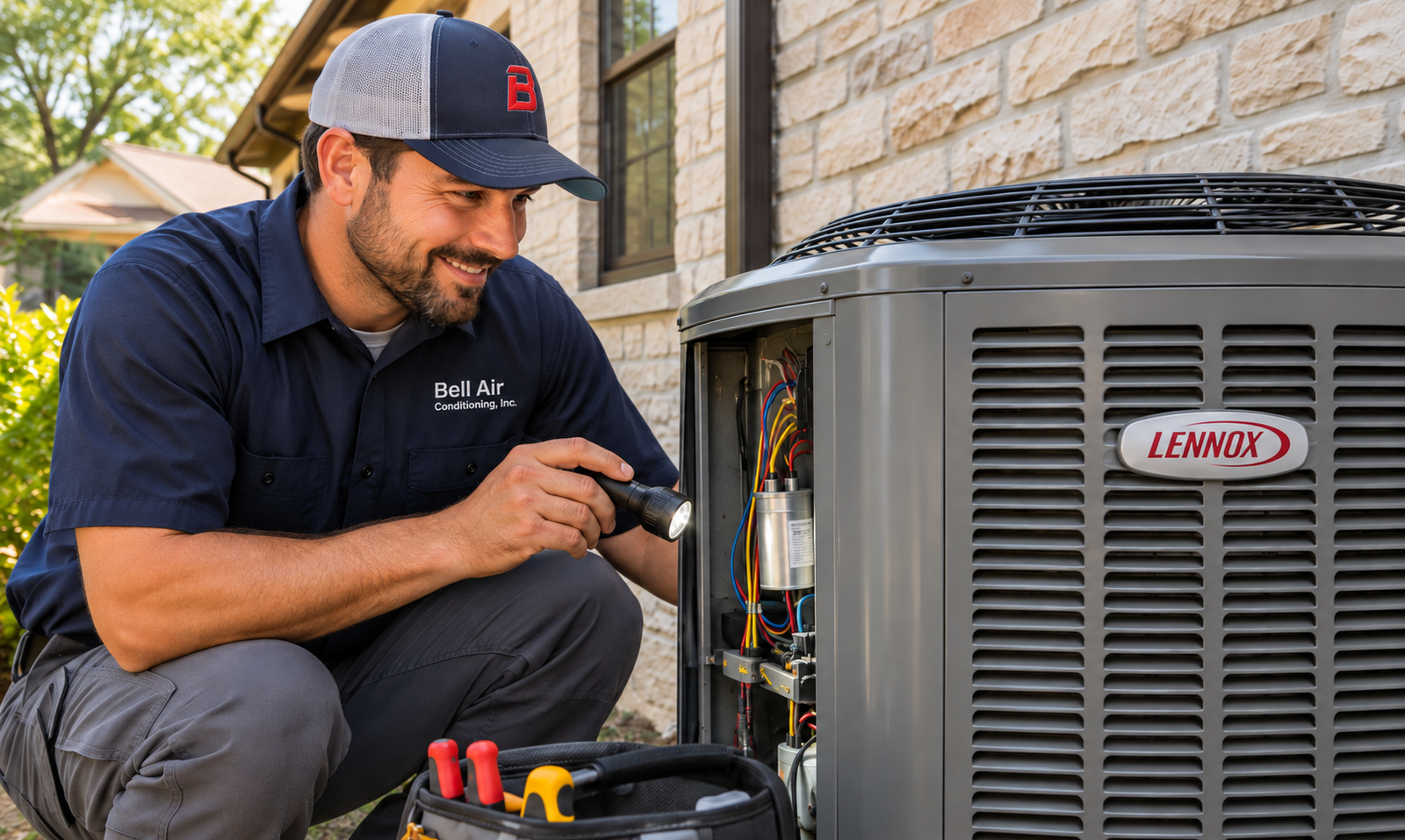
Every heating and cooling system makes some noise, and many HVAC sounds are completely normal. You might hear a gentle hum when your air conditioner starts, a click when your thermostat calls for heating or cooling, or the sound of air moving through your vents.
But what happens when your HVAC system suddenly starts making a noise you’ve never heard before?
Here in Central Texas, our heating and cooling systems work hard throughout the year. Between long summers and unpredictable temperature changes, it’s not unusual to rely on both your air conditioner and heater within the same week.
While some HVAC sounds are perfectly normal, others can be early warning signs that something needs attention. Knowing the difference can help you recognize potential problems before they become more serious.
Here are five HVAC sounds homeowners shouldn’t ignore.
1. Banging or Rattling: Something May Be Loose
A little vibration is normal when your system is running, but loud banging, clanking, or continuous rattling isn’t something you want to overlook. These noises can sometimes be caused by loose panels, debris inside the outdoor unit, or components that have become loose or damaged over time.
When to be concerned: If your system suddenly develops a loud metallic banging or clanking noise, turn it off and have it inspected. A loud bang when a gas furnace ignites also warrants prompt professional attention.
2. Squealing or Screeching: A Motor May Need Attention
If your air conditioner or heater starts making a high-pitched squealing or screeching sound, it may be coming from one of the system’s moving parts. Fan motors and blower motors contain components that can wear with age and regular use. When bearings or other mechanical parts begin to wear out, unusual high-pitched noises can develop. Sometimes these sounds start intermittently before becoming more noticeable.
When to be concerned: A new, persistent squealing or screeching noise should be checked by a technician. If the sound is especially loud or severe, turn the system off rather than continuing to run it.
3. Grinding or Scraping: Don’t Keep Running the System
Grinding is one of those noises you definitely don’t want to ignore. A grinding or scraping sound can indicate that a motor or another moving component isn’t operating properly. Continuing to operate equipment with a mechanical problem can sometimes cause additional damage.
When to be concerned: If you hear grinding or metal scraping coming from your indoor or outdoor unit, turn the system off and schedule service. This is one of those situations where waiting to see whether the noise goes away isn’t a good idea.
4. Buzzing: It Could Be an Electrical or Mechanical Issue
Most HVAC systems produce a soft humming sound during normal operation. However, a sudden, loud buzzing or vibrating noise is a different story. Buzzing can sometimes be associated with electrical components, motors, contactors, or other equipment problems. Loose parts may also create a vibration that sounds similar to buzzing. Because several different issues can produce this sound, the noise alone isn’t enough to identify the problem.
When to be concerned: If your system develops an unusually loud buzzing sound, especially if it’s struggling to start or isn’t operating normally, contact a professional. Buzzing accompanied by a burning smell requires immediate attention.
5. Hissing or Whistling: Pay Attention to Where It’s Coming From
Hissing and whistling can have different causes depending on where the sound originates. A whistling sound near an air vent may indicate restricted airflow, sometimes caused by a dirty filter or an airflow issue. A noticeable hissing sound near the indoor cooling coil, outdoor equipment, or refrigerant lines may indicate a refrigerant-related problem, including a possible leak.
When to be concerned: If you hear persistent hissing from your HVAC equipment, particularly around refrigerant components, turn the system off and schedule an inspection. If you suspect a natural gas leak near a gas furnace, leave the building immediately without operating electrical switches or equipment, and contact your gas utility or 911 from a safe location.
What Should You Do About Unusual HVAC Sounds?
First, don’t panic. Not every unfamiliar sound means you’re facing an expensive repair.
Pay attention to what you’re hearing and when it happens. Does the noise occur when the system first starts? Does it continue throughout the entire cycle? Is it coming from the indoor unit, outdoor unit, or air vents? These details can be helpful when you call for service.
You can also check your air filter and make sure accessible supply and return vents aren’t blocked. However, don’t remove equipment panels or attempt to inspect electrical components or moving parts yourself.
A Little Attention Today Can Help Prevent Bigger Problems Tomorrow
Your HVAC system doesn’t have to be completely broken to let you know something isn’t right. Sometimes an unusual noise is simply the first noticeable sign of a developing problem. Addressing it early may help prevent additional damage, unexpected breakdowns, or more expensive repairs.
Routine maintenance can also help identify worn components and other potential concerns before they affect your comfort. You can learn more in our article about when to schedule seasonal HVAC maintenance in Central Texas.
Hearing Something Unusual? Bell Air Can Help.
At Bell Air Conditioning, we understand how important it is to have a heating and cooling system you can depend on. If your HVAC system has started making unfamiliar noises, our team can inspect the equipment, explain what we find, and help you understand your repair options.
We’re proud to serve homeowners and businesses in Belton and the surrounding Central Texas communities with dependable heating and cooling service.
Give Bell Air Conditioning, Inc. a call at (254) 939-1141 or book service online.
We’re happy to help you get to the bottom of that noise!
Bell Air Conditioning, Inc.
TACLA21562E

